
When people think about orthodontic treatment, they usually think about braces or Invisalign®.
They’re the visible part of the process. They’re what move the teeth and create the new smile.
But if you asked me what plays the biggest role in keeping that result long-term, my answer would often be something much less exciting:
Your retainer.
In fact, retainers are one of the most important parts of orthodontic treatment, because they’re responsible for protecting everything you’ve worked so hard to achieve.
Teeth Naturally Want to Move
One of the biggest misconceptions in orthodontics is that once teeth are straight, they’ll stay that way forever.
Unfortunately, that’s not how teeth work.
Even after treatment is completed, teeth remain influenced by:
- The tongue
- The lips and cheeks
- Everyday chewing forces
- Natural ageing
- Ongoing facial growth
Teeth are constantly responding to these pressures throughout life.
Without retention, they often begin to drift.
Why Teeth Move After Braces or Invisalign®
When teeth are moved during orthodontic treatment, the surrounding bone and tissues need time to adapt to their new positions.
Even after braces are removed or Invisalign treatment finishes, there can still be a natural tendency for teeth to move back towards where they started.
Orthodontists call this relapse.
It’s completely normal and one of the main reasons retainers are so important.
What Does a Retainer Do?
A retainer helps hold the teeth in their new positions while the surrounding tissues stabilise.
It also helps resist the natural forces that encourage teeth to shift over time.
Think of orthodontic treatment as creating the result and retention as protecting it.
Without retainers, even beautifully aligned teeth can gradually become crowded or misaligned again.
Types of Retainers
There are two main types of retainers.
Removable Retainers
These are usually clear retainers worn according to your orthodontist’s instructions.
They are:
- Comfortable
- Discreet
- Easy to remove for eating and cleaning
The main challenge is remembering to wear them consistently.
Fixed Retainers
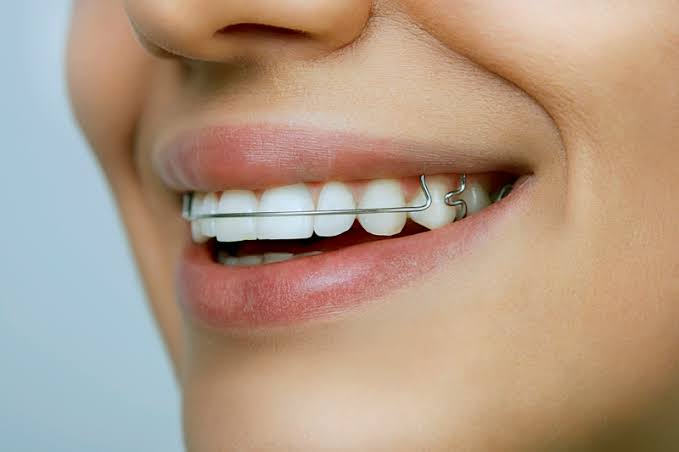
A fixed retainer is a thin wire bonded behind the teeth, most commonly on the lower front teeth.
Because it stays in place, it provides continuous support without relying on memory or routine.
Many patients benefit from a combination of both removable and fixed retainers.
Retention Is Not a Short-Term Phase
One of the most important things I explain to patients is that retention isn’t a brief stage that ends after a few months.
The forces that move teeth never disappear.
That’s why long-term retainer wear is often recommended to maintain the result.
I often tell patients that braces and Invisalign straighten teeth, but retainers are what keep them straight.
Simple Habits That Protect Your Smile
Looking after your retainer doesn’t require much effort, but it does require consistency.
I encourage patients to:
- Wear retainers exactly as instructed
- Keep removable retainers clean
- Attend review appointments
- Replace damaged retainers promptly
- Contact us if a retainer becomes loose or no longer fits
These small habits can make an enormous difference over the years.
Retainer Care and Orthodontics
At South Coast Orthodontics, we regularly remind our patients from Corrimal to Dapto and throughout the Illawarra that retention is every bit as important as treatment itself.
Creating a beautiful smile takes time, commitment and careful planning.
Protecting that smile is much simpler, but just as important.
Because while braces and Invisalign may get most of the attention, retainers are often the unsung heroes of successful orthodontic treatment.
And in many cases, they’re the reason a great result stays a great result for years to come.
