
The Oral Health Risks of Vaping – An Orthodontist’s Perspective
As the owner of South Coast Orthodontics in Australia, I am deeply concerned about the widespread use of vaping in public places such as bus stops, train stations, and schools across the Illawarra region.
It is increasingly common to see teenagers and adults vaping openly in public spaces, often passing devices around in groups. This trend is particularly troubling given the serious health implications associated with vaping, especially for young people.
While I will refrain from delving into the broader political and social debates surrounding this issue, I feel compelled to highlight the significant oral health and orthodontic risks linked to vaping.
What Is Vaping?
Vaping was originally developed as a method to help smokers quit traditional cigarettes. It involves inhaling vaporised liquid through an electronic device that heats a mixture of nicotine, flavourings, and chemical compounds to produce an aerosol.
Over time, vaping has become widely marketed as a “safer alternative” to smoking, which has contributed to its growing popularity, particularly among younger demographics.
However, the reality is far more complex.
Despite claims that vaping products contain fewer harmful chemicals than cigarettes, the true composition and long-term health effects of inhaled vapour remain uncertain.
Contrary to popular belief, the vapour produced by e-cigarettes is not harmless water vapour. It can contain:
- Nanoparticles
- Volatile organic compounds
- Carbonyls
- Heavy metals
- Nicotine
These substances are far from benign and may pose serious health risks to both the lungs and the oral cavity.
Growing Medical Evidence on Vaping Risks
Recent medical data has revealed a troubling link between vaping and lung injuries, chronic respiratory conditions, and asthma.
Reports from the Centers for Disease Control and Prevention (CDC) in the United States have documented numerous cases of severe lung injuries and fatalities associated with vaping.
The growing body of research suggests that vaping is far from risk-free, particularly when used regularly or by individuals who were previously non-smokers.
Marketing and Youth Uptake
One of the most concerning aspects of vaping is the aggressive marketing tactics used by vape companies.
Bright packaging, appealing product design, and a wide range of sweet and fruity flavours have significantly increased the popularity of vaping among young people.
In Australia, this has contributed to a surge in e-cigarette use among teenagers and young adults, with a particularly noticeable rise among young females.
This trend is alarming because early nicotine exposure increases the likelihood of long-term addiction and ongoing health consequences.
The Impact of Vaping on Oral Health
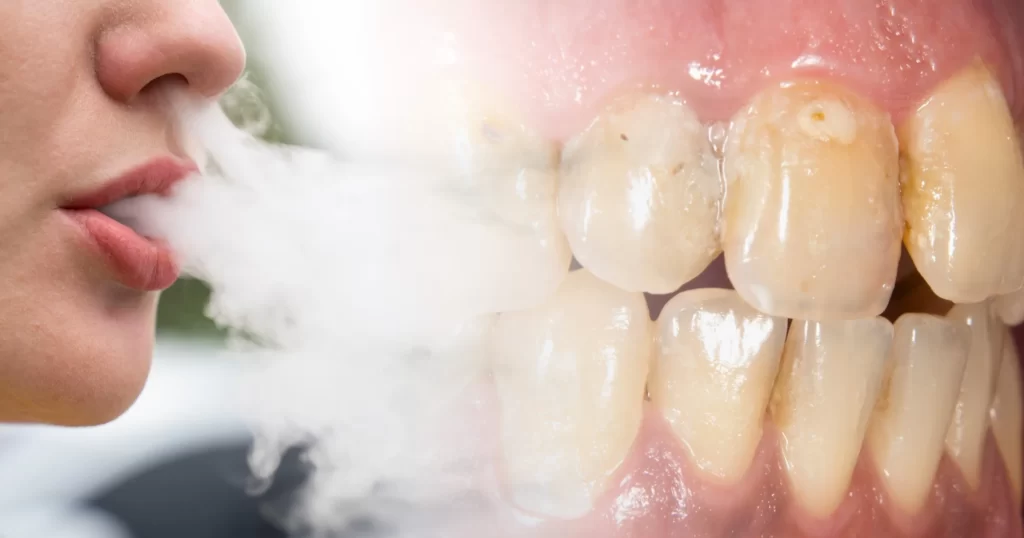
From a dental and orthodontic perspective, the impact of vaping on oral health is a serious concern.
One of the most common side effects is dry mouth, which occurs because vaping can reduce saliva production.
Saliva plays a critical role in maintaining oral health. It helps:
- Neutralise acids
- Wash away bacteria
- Protect teeth from decay
When saliva levels decrease, the mouth becomes more vulnerable to dental problems, including:
- Cavities (dental caries)
- Gum disease
- Oral infections
In addition, vaping may disrupt the natural balance between beneficial and harmful bacteria in the mouth, increasing the risk of periodontal disease.
Increased Risk of Dental Damage
The combination of dry mouth and exposure to vaping chemicals can further worsen oral health issues.
This environment may contribute to:
- Increased tooth decay
- Oral lesions
- Gum inflammation
- Delayed healing of oral tissues
There is also ongoing scientific investigation into a possible link between vaping and oral cancer, which raises further concerns about the long-term safety of these products.
Vaping and Orthodontic Treatment
For patients undergoing orthodontic treatment, vaping may create additional complications.
Emerging research suggests that nicotine found in vaping liquids may have vasoconstrictive effects, meaning it narrows blood vessels and reduces blood flow.
This reduced blood circulation may affect tissues such as the periodontal ligament, which surrounds and supports the teeth.
Healthy blood flow is essential for the cellular processes that allow teeth to move safely during orthodontic treatment.
If blood supply is compromised, several problems may occur:
- Slower tooth movement
- Reduced treatment effectiveness
- Increased risk of alveolar bone loss
- Greater likelihood of root resorption (root erosion)
These complications can negatively impact orthodontic outcomes and potentially extend treatment times.
FAQ
1. Is vaping safer than smoking cigarettes?
Vaping is often marketed as being less harmful than traditional cigarettes because it does not involve the combustion of tobacco, which releases many toxic chemicals.
However, research increasingly shows that vaping still carries serious health risks, especially for individuals who were not previously smokers.
2. Can vaping help me quit smoking?
Some individuals use vaping as a way to transition away from traditional cigarettes by gradually reducing nicotine levels.
However, vaping is not approved as a smoking cessation tool by the Australian Therapeutic Goods Administration (TGA) or the U.S. Food and Drug Administration (FDA).
Increasing global research continues to highlight its potential dangers and long-term health consequences.
3. What are the potential health risks of vaping?
Potential health risks include:
- Lung damage
- Nicotine addiction
- Exposure to harmful chemicals
- Increased risk of respiratory disease
- Popcorn lung (bronchiolitis obliterans)
4. What harmful ingredients are found in vaping products?
Nicotine
Nicotine is a highly addictive substance found in many e-liquids. It can negatively affect the cardiovascular system and lead to long-term dependency.
Propylene Glycol and Vegetable Glycerin
When heated and inhaled, these chemicals can break down into toxic compounds such as formaldehyde and acetaldehyde.
Flavourings
Many e-liquids contain artificial flavouring chemicals such as diacetyl, which has been linked to lung damage and respiratory illness.
Heavy Metals
Poorly manufactured or older vaping devices may release heavy metals such as lead, nickel, and chromium into the vapour.
5. What are the new TGA vaping laws in Australia?
Following extensive medical research and hospital data, new Australian vaping regulations came into effect on 1 July 2024.
Penalties now apply for the unlawful importation, manufacture, advertising, supply, and commercial possession of vaping goods.
Maximum criminal penalties per contravention include:
- Up to seven years imprisonment, and/or
- 5,000 penalty units (approximately $1.565 million for individuals and $7.825 million for corporations)
Maximum civil penalties include:
- 7,000 penalty units ($2.191 million) for individuals
- 70,000 penalty units ($21.91 million) for corporations
These values are based on the penalty unit rate at 30 June 2024, which is indexed periodically.
As an orthodontist, member of the medical community, and father of three children, I strongly oppose the sale, promotion, and use of vaping products.
Protect your health, protect your smile, and make choices that support your long-term wellbeing.
A Simple Message
All of this scientific discussion may sound complex, but the takeaway message is very simple:
Stop vaping.
Protecting Oral Health in Our Community
Dental professionals across Wollongong, the Illawarra, Sydney, and Australia are increasingly committed to raising awareness about the health risks associated with vaping.
At South Coast Orthodontics, my team and I are dedicated to helping patients make better lifestyle choices that support their oral health and orthodontic treatment outcomes.
Education, prevention, and informed decision-making are essential if we are to protect the health of future generations. Book a Free Consultation Today.
Warm regards,
Dr Kamal Ahmed
P.S. Why did the pharmacist walk on her tiptoes?
She didn’t want to wake the sleeping pills.
