
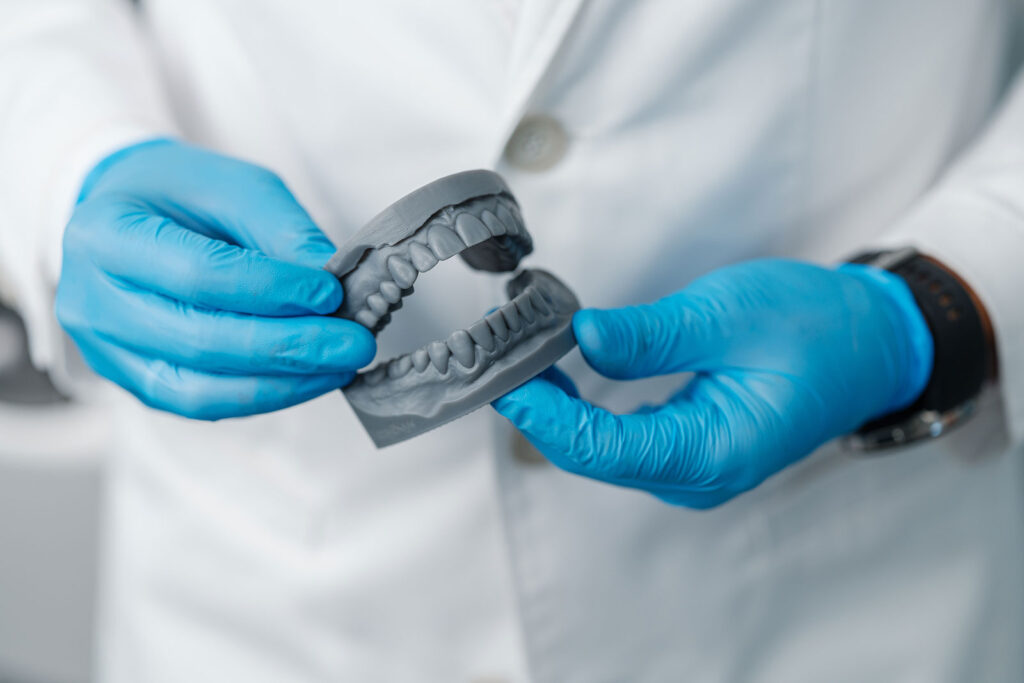
3D Printing in Orthodontics – Back to the Future of Dental Innovation
Picture this.
It’s a Friday afternoon at the Pier One Hotel in Sydney, one of Australia’s most beautiful cities.
The water in the harbour is shimmering, with sunlight breaking through the clouds above the emerald city’s waterfront mansions, hotels, apartments, yachts and boats.
What am I doing and who am I with?
A romantic stroll with my wife?
Playing chase and cuddling my kids?
No.
I’m with 100 other orthodontists, attending a lecture by Dr. Björn Ludwig, a renowned German orthodontist and academic, who delivered one of the most riveting presentations I’ve ever attended:
“Back to the future = High-tech versus Low-tech”
A Lecture That Redefined Modern Orthodontics
Dr. Björn Ludwig, Assistant Professor at the University of Homburg/Saar (Department of Orthodontics), explored a wide range of advanced orthodontic topics, including:
- 3D printing methods in orthodontics
- Mini screws (TADs)
- Extraction vs non-extraction treatment decisions
- Retention strategies
Each topic highlighted how modern orthodontics continues to evolve through science, innovation, and precision-based care.
The Rise of 3D Printing in Orthodontics
One of the most impactful parts of the lecture was the discussion on 3D printing in orthodontics and how it is transforming clinical practice.
3D printing is revolutionising orthodontic treatment by enabling:
- Highly precise treatment planning
- Fully customised orthodontic appliances
- Improved patient comfort and outcomes
With this technology, orthodontists can design and produce models, aligners, and brackets tailored specifically to each patient’s unique dental structure.
This leads to:
- Better treatment accuracy
- Improved efficiency
- Enhanced patient satisfaction
What Is 3D Printing in Orthodontics?
3D printing, also known as additive manufacturing, is the process of creating three-dimensional objects layer by layer using digital models.
In orthodontics, this allows for the creation of:
- Clear aligners
- Retainers
- Custom orthodontic brackets
- Dental models
The key advantage is precision down to microscopic accuracy.
This makes 3D printing in orthodontics one of the most significant technological advancements in modern dental care.
Why 3D Printing Improves Patient Outcomes
The primary goal of 3D printing in orthodontics is simple:
Better patient outcomes through personalisation
By using digital scans and 3D modelling, orthodontists can:
- Create fully customised treatment plans
- Predict tooth movement more accurately
- Improve treatment comfort and efficiency
This level of personalisation ensures that each patient receives care designed specifically for their dental structure.
Faster, More Efficient Orthodontic Treatment
One of the biggest advantages of 3D printing in orthodontics is speed.
Traditionally, orthodontic appliances required:
- Manual fabrication
- Multiple lab processes
- Longer waiting times
With 3D printing, orthodontists can:
- Produce appliances faster
- Reduce patient waiting time
- Begin treatment sooner
This significantly streamlines the entire orthodontic workflow.
Key Benefits of 3D Printing in Orthodontics
1. Unmatched Precision
3D printing allows micron-level accuracy, ensuring:
- Better fitting appliances
- More predictable results
- Improved treatment control
2. Complex Customisation
Orthodontists can now create highly complex designs that were previously impossible using traditional methods.
3. Cost Efficiency
By reducing material waste and manual labour, 3D printing in orthodontics can lower production costs over time.
This may improve accessibility to orthodontic treatment.
4. Improved Patient Experience
Patients benefit from:
- Better-fitting appliances
- Fewer adjustments
- More comfortable treatment
Challenges and Limitations
Despite its advantages, 3D printing in orthodontics does come with challenges:
- High initial investment costs
- Need for specialised training
- Learning curve for practitioners
- Ongoing validation of long-term material durability
- Biocompatibility considerations
Regulatory standards are still evolving to ensure safety and consistency.
The Future of 3D Printing in Orthodontics
Despite current limitations, the future is extremely promising.
Ongoing advancements include:
- New biocompatible materials
- Improved printing accuracy
- AI-assisted orthodontic planning
- Faster production systems
These developments will continue to push 3D printing in orthodontics toward becoming a standard part of modern dental care.
Looking Ahead at South Coast Orthodontics
At South Coast Orthodontics, I am deeply interested in how emerging technologies like 3D printing in orthodontics can improve patient care.
The goal is simple:
- Stay at the forefront of orthodontic innovation
- Improve treatment efficiency
- Enhance patient experience
- Deliver more predictable outcomes
By embracing technology responsibly, we ensure that our patients always benefit from the best available care.
Final Thoughts
Orthodontics is evolving rapidly.
What once required manual techniques is now being transformed through digital workflows and 3D printing technology.
The key lesson from Dr. Ludwig’s lecture is clear:
Never become complacent. Always move forward.
That mindset is what shapes better patient care and a stronger future for orthodontics.
Yours truly,
Dr Kamal Ahmed
P.S.
Oh, all this talk has got me thinking…
What do printers eat on their toast?
aper jam.
